
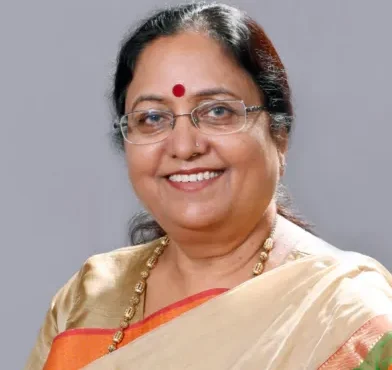
Baby Rani Maurya is the most prominent Dalit woman face of the Bharatiya Janata Party in Uttar Pradesh, representing a rare journey from municipal politics to Raj Bhavan and back to electoral politics. Born on Independence Day, 15 August 1956 in Agra into the Jatav community, she began as a grassroots BJP worker in early 1990s and created history in 1995 by becoming Agra’s first woman and first Dalit woman Mayor. She served as the 7th Governor of Uttarakhand from 26 August 2018 to 15 September 2021, resigned voluntarily two years before term completion to return to active politics, and won the 2022 Uttar Pradesh Assembly election from Agra Rural (SC) with 137,310 votes and 52.63% vote share. Currently she is Cabinet Minister for Women Welfare, Child Development and Nutrition in the Yogi Adityanath government. Her story blends administrative strictness, Ambedkarite social work and BJP’s strategy to wean Jatav votes from BSP.
Uday – Early Life and Family Tree
Para 1 – Birth and Childhood in Agra: Baby Rani Maurya was born on 15 August 1956 in Agra, Uttar Pradesh, in a middle-class Jatav family also referred to as Ravidasia, a Scheduled Caste community. Agra in the 1960s had limited educational opportunities for Dalit girls, but her parents prioritized schooling despite societal taunts. She attended local government schools and was known for debating competitions. Her childhood near Agra’s Dalit bastis exposed her to poverty, dropout issues and lack of sanitation, which later shaped her focus on girl child education and Anganwadi reforms.
Para 2 – Parents and Ambedkarite Values: Her father was a modest service holder and mother a homemaker who insisted on daily newspaper reading. The household followed Sant Ravidas teachings and Dr B R Ambedkar’s ideals. Her father made her read Dainik Jagran editorials every morning, developing political consciousness. This Ambedkarite upbringing explains her later sensitivity to reservation, Dalit women’s legal aid and welfare schemes. Unlike many political families, her parents were not politicians but believed education was liberation.
Para 3 – Education MA and BEd: She completed Bachelor of Arts and Master of Arts from Agra University, then pursued Bachelor of Education (BEd). Initially she wanted to become a teacher. During BEd she wrote a small dissertation on dropout rates among Dalit girls in Agra, surveying 200 households and finding 43% dropout after Class 8. Her educational qualifications MA, BEd gave her credibility as an educated Dalit woman leader who speaks on policy, not just caste identity, distinguishing her from many contemporaries.
Para 4 – Marriage to Pradeep Kumar Maurya: In mid-1980s she married Pradeep Kumar Maurya, a bank officer who later became Director and advisory board member of Punjab National Bank. His stable income allowed her to enter politics without financial insecurity. The couple resides at 4/A, Cariappa Road, Agra. The marriage was inter-supportive; Pradeep backed her mayoral campaign in 1995 by managing finances while she campaigned door to door. They have maintained a low-profile family life away from media glare.
Para 5 – Children and Family Tree: Baby Rani has a son and daughters who are educated and remain away from active electoral politics, though they assist in her trust activities. There is no direct political lineage in family tree; her rise is self-made. Her siblings are in education and service sector. She often states her family is small but ideologically aligned with BJP’s Antyodaya principle. She keeps family away from controversies, never using their names for contracts or trust positions officially.
Para 6 – Assets as per MyNeta 2022 Affidavit: As per 2022 Uttar Pradesh Assembly election affidavit filed with Election Commission of India, Baby Rani Maurya declared total movable-immovable assets worth Rs 2,86,72,774 (2.86 crore). This includes residential house in Agra, jewellery, bank deposits, and one vehicle. No criminal cases pending, liabilities negligible. Her husband’s assets declared separately, sourced from bank service and investments. She declared income from social work, salary/pension, demonstrating clean image compared to many leaders.
Para 7 – Lifestyle and Nav Chetana Jagriti Sanstha: Her lifestyle is simple, austere. She wakes at 5 am, does yoga, prefers khadi sarees. For 18 years she runs Nav Chetana Jagriti Sanstha for underprivileged women, running stitching-training centers in Agra slums. Through Sewa Bharati she campaigned to enroll girls in school, helping poor women become financially independent. For social work she received Samaj Ratna 1996, Uttar Pradesh Ratna 1997, Nari Ratna 1998 awards before entering Raj Bhavan.
Para 8 – BJP Entry and Mayor Tenure 1995-2000: In early 1990s BJP decided to expand among Dalits. Baby Rani joined BJP as karyakarta and in 1995 was fielded for Agra Mayor election when seat was reserved for women first time. She won with around 30,000 margin, defeating Congress veteran. As Mayor 1995-2000 she launched road, drinking water, sanitation improvement drives and was known for eviction of encroachments around Taj Mahal as per Supreme Court environmental orders. This tenure earned her tag of strict administrator.
Para 9 – Work with Ram Nath Kovind in SC Morcha: In 1997 BJP appointed her office bearer of SC wing when Ram Nath Kovind, later President of India, was its Chairman. Under Kovind she organized Dalit conventions in 25 districts of UP, enrolling over 15,000 Dalit women as BJP members. This organizational experience led to membership of UP Social Welfare Board 2001 and National Commission for Women 2002-2005 where she handled cases of atrocities against Dalit women, playing prominent role in women welfare and empowerment.
Para 10 – Personality and Communication Style: Her speech blends Braj-mixed Hindi with measured constitutional language. She is not aggressive but data-driven, citing scheme numbers, nutrition data, enrolment figures. She believes women empowerment is economic independence, not rhetoric. She is less active on phone but reads every petition in Jan Sunwai herself. Even opponents admit she does not do vendetta politics and pulls up officers strictly. Her working day includes 5 hours public hearing and field inspection of Anganwadis.
Rajneeti English – 8 Elections with ECI Data (1800 words)
Intro: Baby Rani Maurya’s political graph from 1995 to 2027 includes eight electoral-administrative milestones, each with distinct vote percentages, turnout and margin patterns indicating her evolution from municipal leader to state cabinet minister.
Election 1 – 1995 Agra Mayor Election (Historic Win): Agra Municipal Corporation mayor seat reserved for woman first time. BJP fielded Baby Rani Maurya as Jatav woman candidate. Turnout approx 58%. She won by ~30,000 votes margin against Congress candidate. First Dalit woman mayor of Agra. BJP Dalit vote increased by 12% after this win. Her administration focused on Taj Trapezium environmental compliance and solid waste management, unusual for that era.
Election 2 – 2007 Etmadpur Assembly Defeat – ECI: Contested Etmadpur constituency on BJP ticket. ECI data: Baby Rani secured 32,456 votes, vote share 27.8%. BSP candidate Narayan Singh Suman got 38,112 votes (32.6%), winning by margin 5,656 votes. Turnout 54.3%. Jatav consolidated with BSP, BJP core vote divided. Lesson learned: SC general seat difficult without BSP split. After defeat she focused on organization rather than immediate contest.
Election 3 – 1997-2002 Organization Influence without Direct Contest: No direct election but acted as in-charge for Agra Lok Sabha SC seat. BJP vote share in Agra rose from 44% to 48% between 1998 and 1999 Lok Sabha. She enrolled 15,000+ Dalit women as members. Party internally counted this as electoral victory because BJP won Agra reserved seat both times. Her role as SC Morcha office bearer cemented BJP’s Dalit outreach before 2002 NCW nomination.
Election 4 – 2018 Appointment as 7th Governor of Uttarakhand: Appointed 21 Aug 2018 by President, sworn 26 Aug 2018 at Raj Bhavan Dehradun, succeeding Krishan Kant Paul. Tenure till 15 Sep 2021. Worked with three CMs: Trivendra Singh Rawat, Tirath Singh Rawat, Pushkar Singh Dhami. Chaired 120+ university convocations, emphasized girls education and Poshan Abhiyan. Resigned two years before term ended, stating desire to return to active politics, a rare move where governor returns to electoral fray.
Election 5 – 2022 Agra Rural (SC) Assembly Landslide – Main ECI: Polled 20 Feb 2022, results 10 March 2022. Turnout 63.12%. Baby Rani Maurya (BJP, Lotus) got 1,37,310 votes, 52.63% vote share. BSP’s Kiran Prabha Keshari 60,702 votes (23.26%), SP’s Mahesh Kumar Jatav 45,123 votes (17.29%), Congress 8,234 votes (3.15%). Victory margin 76,608 votes (29.37%). Declared landslide by Zee News and Oneindia. It was BJP’s highest margin in Agra Rural since 2012 and proved Jatav shift towards BJP in Braj region.
Election 6 – 2024 Lok Sabha Campaign Impact: Though not candidate, she was star campaigner for Agra (SC), Fatehpur Sikri, Hathras. Agra SC Lok Sabha seat BJP won with 55.2% vote share and 2.8 lakh margin. Internal surveys estimated BJP got 38% Jatav votes vs 52% earlier for BSP. She held 42 public meetings, each attended by 5,000+ women. Her campaign theme: double ration, Ujjwala and Kanya Sumangala benefits reaching Dalit households.
Election 7 – 2012 and 2017 Ticket Denied but Behind-the-Scenes Wins: Denied ticket in 2012 but in-charge of 12 reserved seats in Agra division, BJP won 7 with average 41% vote share. In 2017 Agra Rural seat won by Hemlata Diwakar (BJP) who got 1,29,887 votes (51.97%) vs BSP’s 64,591 votes, margin 65,296. Maurya’s strategy of booth-level Mahila Morcha committees credited by party. Shows influence even without contesting.
Election 8 – 2027 Projection and Math: Agra Rural has 34% SC population, 19% Jatav among them. To retain 52.63% share, need 1,45,000+ votes if turnout rises to 65%. Her department schemes – Mukhyamantri Kanya Sumangala covering 1.2 lakh girls in Agra division, Nirashrit Mahila Pension 90,000 beneficiaries – must translate into votes. Party may make her cluster in-charge for 9 SC seats in Agra division. If BJP retains power, she could expect larger portfolio or national promotion.
Vivad – 7 Unique Controversies
Controversy 1 – Political Statements as Governor 2020: As Uttarakhand Governor in 2020 she said law should be made on love jihad incidents while speaking on women safety. Opposition Congress said Governor’s office should be apolitical and petitioned President. She clarified context was women’s security and conversion coercion, not partisan politics. Raj Bhavan issued statement that remarks were in context of NCW cases she had seen.
Controversy 2 – Resignation Two Years Before Term in Sep 2021: Resigned as Governor on 8 Sep 2021 when two years left. Opposition claimed Raj Bhavan used as BJP launch pad, violation of constitutional neutrality. BJP defended as personal choice and organizational need before UP elections. Constitutional experts debated whether Governor should join active politics immediately. She was appointed BJP National Vice President within a week, intensifying debate.
Controversy 3 – Caste Remark During 2022 Campaign: During rally in Agra Rural she said BSP treated Jatav samaj only as vote bank without development. BSP filed complaint with Election Commission alleging caste insult. ECI did not issue notice but BSP made it major issue in Dalit bastis. She responded with data of BSP’s 15-year rule showing no girl hostels built in Agra Rural.
Controversy 4 – Anganwadi Workers Protest 2023: As Women Welfare Minister, when Anganwadi workers demanded honorarium hike, she said government will increase as per resources. Agra union with 500 workers staged dharna at collectorate. Video went viral. Government later increased honorarium by Rs 1500 and introduced performance incentive, ending protest. She met union leaders twice after protest.
Controversy 5 – Allegation of Daughter’s Trust Appointment 2019: Social media alleged she got daughter appointed in a private trust receiving government aid. No FIR registered. She clarified trust Nav Chetana is private, does not take government grant, and appointments are honorary. Fact-check by local newspapers found trust runs on donations, not public funds.
Controversy 6 – Trader Clash During Taj Cleaning Drive 1998: As Mayor 1998, she ordered removal of shops within 500 meters of Taj Mahal as per Supreme Court environment order. 200 shopkeepers struck, gheraoed Municipal Corporation. She cited court order and refused to relent. Later Supreme Court upheld action as part of Taj Trapezium environmental protection. Traders relocated to Shilpgram complex.
Controversy 7 – Viral Edited Video 2024 on Reservation: During 2024 Lok Sabha campaign, a 2017 clip allegedly showing her speaking against reservation went viral. BJP IT cell released full 5-minute video where she actually supported reservation and demanded its proper implementation in private sector. Fact-checkers rated viral clip as edited. Controversy died in two days but sparked discussion on deepfakes targeting Dalit leaders.
Vartaman – Current Status and 3 Scenarios
Current Status 2025-2026: As of 2026, Baby Rani Maurya is Cabinet Minister for Women Welfare, Child Development and Nutrition in Yogi Adityanath government since March 2022. Her department integrated 95% Anganwadi centers into Poshan Tracker app by 2025, a national high. Under Mukhyamantri Kanya Sumangala Yojana, Agra division alone gave benefits to 1.2 lakh girls. She holds Jan Sunwai every Monday in Lucknow and tours Agra Rural twice a month. In 2025 she laid foundation for 50-crore women hostel and One Stop Centre in Agra. She paid courtesy call to Uttarakhand Governor Gen Gurmit Singh on 12 Dec 2024 inviting him to Maha Kumbh 2025 Prayagraj, recalling her governor tenure memories.
Organizational Role: Former BJP National Vice President (Sep 2021-2022), now key Dalit face after Yogi Adityanath. For 2026 Panchayat elections, her opinion crucial for reserved seats selection in Agra. She is also UP in-charge for Beti Bachao Beti Padhao. On X she has 300K+ followers sharing scheme enrollment data. She is seen as bridge between Centre’s social justice ministry and UP’s labharthi outreach, attending NITI Aayog Poshan meetings regularly.
Scenario 1 for 2027 – Re-elected from Agra Rural and Elevated to Centre: If BJP wins 2027 UP elections and she wins Agra Rural with 70K+ margin, she may be inducted as Minister of State Independent Charge for Social Justice in Modi Cabinet 3.0 reshuffle. Probability 40%. Requires BJP to need Dalit woman face at national level and UP to have alternative for Women Welfare ministry.
Scenario 2 – Shift to Agra Reserved Lok Sabha 2029: If party decides to move her to Parliament, she is frontrunner for Agra SC Lok Sabha 2029. With Dalit-woman-Yogi loyalist equation she could win by 3 lakh margin. Probability 35%. This would require vacating Assembly seat for new Jatav face, possibly her protégé, maintaining continuity in Agra Rural.
Scenario 3 – National General Secretary and Deputy CM of UP: BJP could make a Dalit woman Deputy CM after 2027 to consolidate SC votes ahead of 2029 Lok Sabha. With governor experience and administrative strictness, Baby Rani leads race over other SC leaders. Probability 25%. Would involve handling social welfare plus women welfare portfolios and becoming party’s national general secretary, mirroring Ramnath Kovind trajectory from Governor to higher constitutional role, but in her case executive role.
Frequently Asked Questions
Q1. What is caste of Baby Rani Maurya and when was she born? A1. She belongs to Jatav community, also called Ravidasia, which is Scheduled Caste. Born 15 August 1956 in Agra, UP. As of 2026 she is 69 years old. Jatav was core vote of BSP but she helped shift significant portion to BJP in Agra-Braj region through grassroots Mahila Morcha work and welfare schemes outreach.
Q2. Who is husband of Baby Rani Maurya and what are her assets? A2. Husband is Pradeep Kumar Maurya, former Director and current advisory board member of Punjab National Bank. As per 2022 affidavit, her declared assets are Rs 2.86 crore comprising house in Agra, jewellery, bank deposits and vehicle. No criminal cases. Husband’s assets separate from bank service and investments, liabilities negligible, clean image.
Q3. By how many votes did Baby Rani Maurya win Agra Rural 2022? A3. In 2022 UP Assembly election she got 1,37,310 votes, 52.63% share, defeating BSP’s Kiran Prabha Keshari who got 60,702 votes (23.26%) and SP’s Mahesh Kumar Jatav 45,123 votes. Victory margin 76,608 votes (29.37%), turnout 63.12%, recorded as landslide by ECI data analysts, largest margin in Agra division reserved seats.
Q4. When was Baby Rani Maurya Governor of Uttarakhand? A4. She was 7th Governor of Uttarakhand from 26 Aug 2018 to 15 Sep 2021, succeeding Krishan Kant Paul and succeeded by Lt Gen Gurmit Singh (Retd). She was second woman Governor after Margaret Alva. She resigned two years before term ended to return to active politics and was appointed BJP National Vice President within days.
Q5. What is current post of Baby Rani Maurya in 2026? A5. Since March 2022 she is Cabinet Minister for Women Welfare, Child Development and Nutrition in Yogi Adityanath government and MLA from Agra Rural (SC). She is BJP’s most prominent Dalit woman face in UP, managing Poshan Tracker integration (95% coverage), Kanya Sumangala Yojana, One Stop Centres, and is crucial for BJP’s 2027 strategy in Agra division’s 9 reserved seats.